
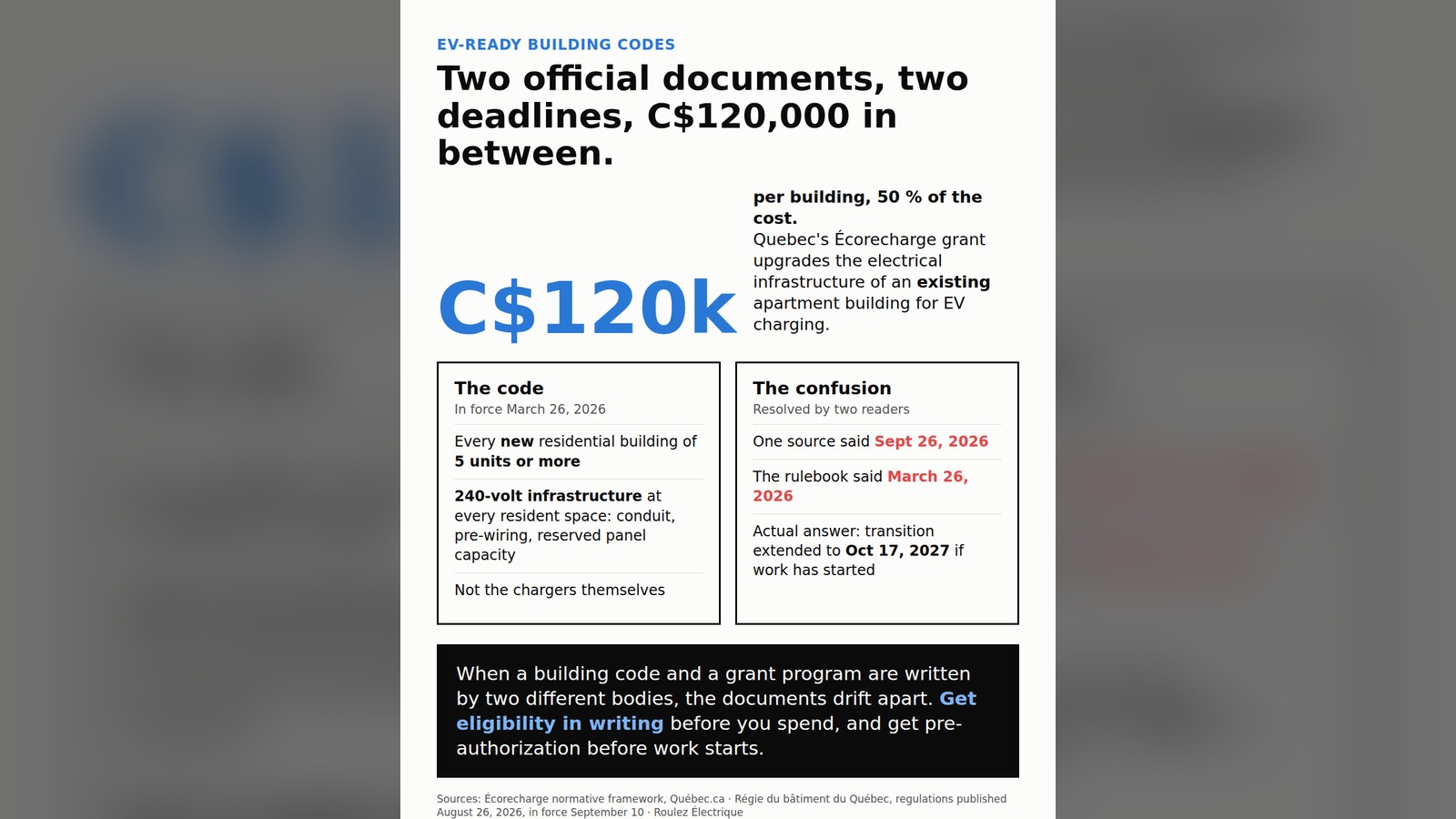
Quebec pays up to C$120,000 per building to make an existing apartment building EV-ready, and for a while nobody could tell you the deadline.
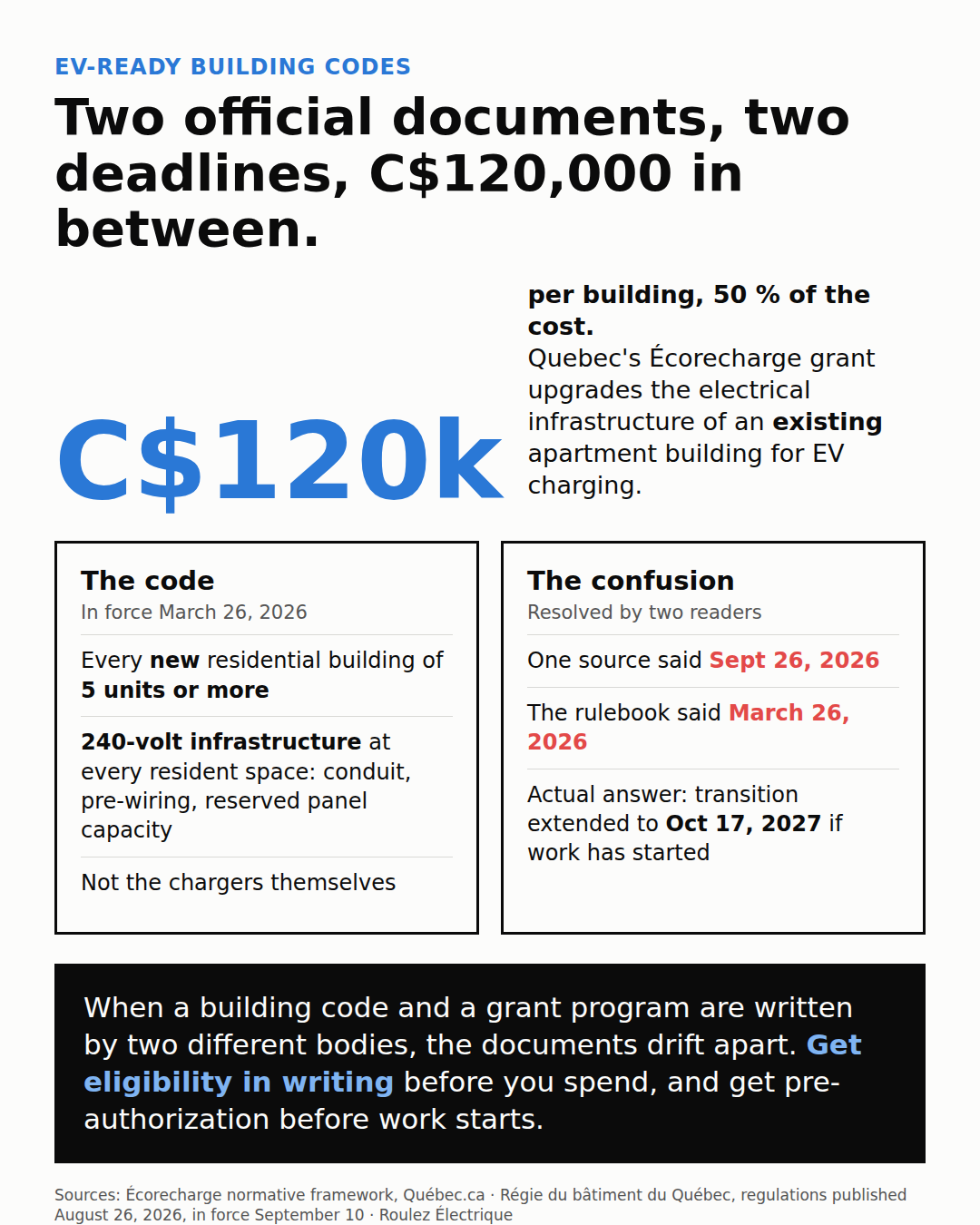
Here is the story, because the mechanics of it apply anywhere a jurisdiction adds EV-ready wiring to its building code.
Since March 26, 2026, Quebec’s building code requires every new residential building of five units or more to install 240-volt charging infrastructure for every resident parking space. Not the chargers themselves. The infrastructure: conduit, pre-wiring, reserved panel capacity. In parallel, a program called Écorecharge covers 50 percent of the cost of upgrading the electrical infrastructure of an existing building, up to C$120,000.
The obvious question is which buildings still qualify, and for a few days there were two defensible answers. A specialized outlet reported that buildings constructed after September 26, 2026 would no longer be eligible, matching the code’s six-month transition. The program’s own rulebook said the building had to be constructed before the electrical chapter came into force, which is March 26, 2026. Six months apart, with C$120,000 riding on it.
The answer turned up in the commenters, which is the part I like. Two readers pointed me to regulations the building authority published on August 26, 2026, in force September 10: the transition period for the building and electrical chapters is extended to October 17, 2027, provided work has begun before that date. So the practical deadline is much further out than either version said.
The program page on the government site still carries the old date. That is the actual lesson here, and it travels: when a code and a grant program are written by two different bodies, the published documents fall out of sync, and the person holding the invoice is the one who pays for it.
So if you are a developer, a building manager or a condo board anywhere with a rule like this: get your eligibility confirmed IN WRITING before you spend anything. An agent on the phone can tell you whatever they want. If your claim is denied eight months later, their word is worth nothing. An email you can keep and produce.
One more thing that matters as much as the date: pre-authorization is required before work starts. Beginning early means losing the grant, whatever else is true.
Has your city or state added EV-ready wiring to its building code yet, and did the paperwork keep up?