
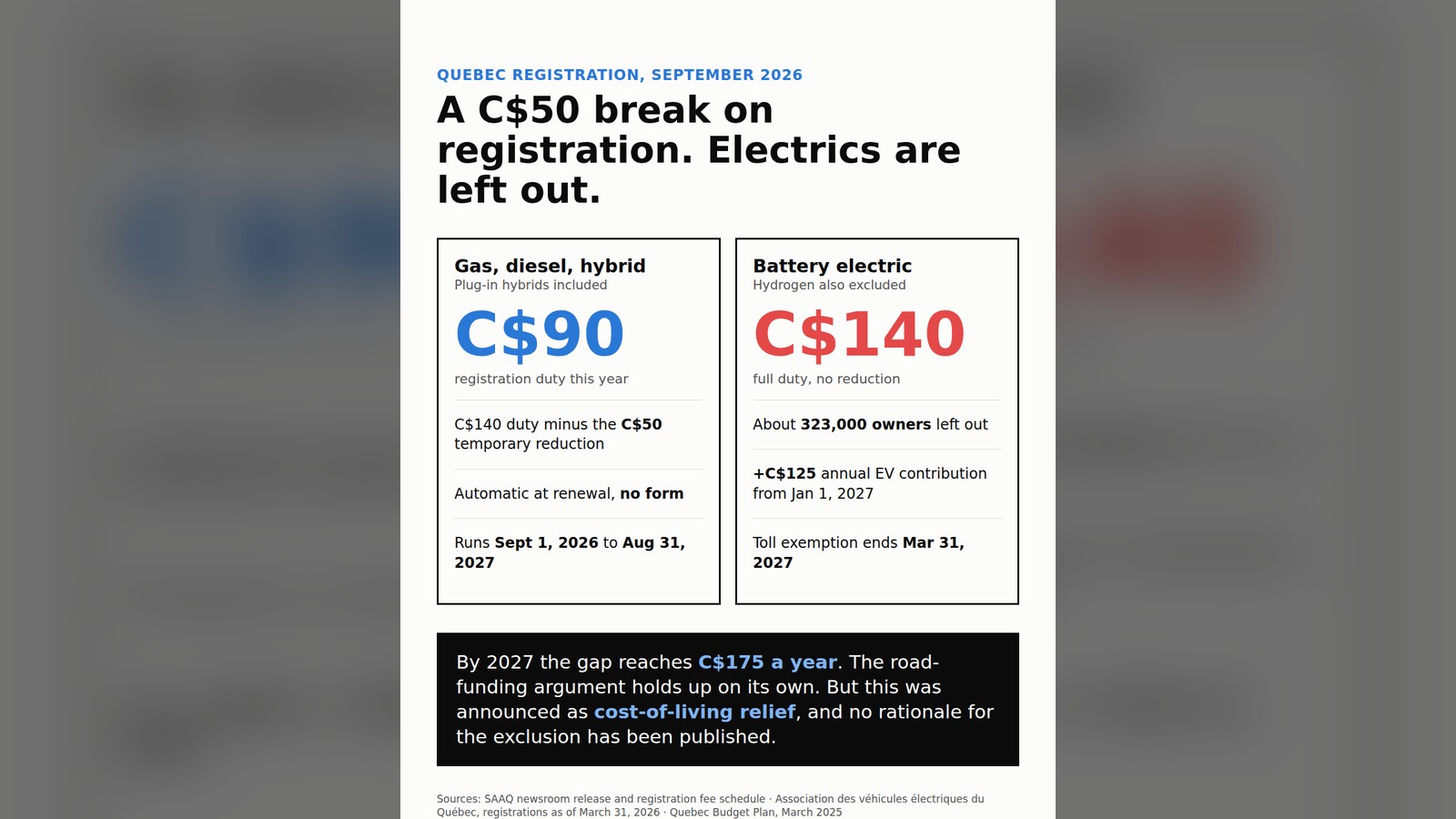
Since September 1, registering a car in Quebec costs C$50 less. Unless it runs on electricity.
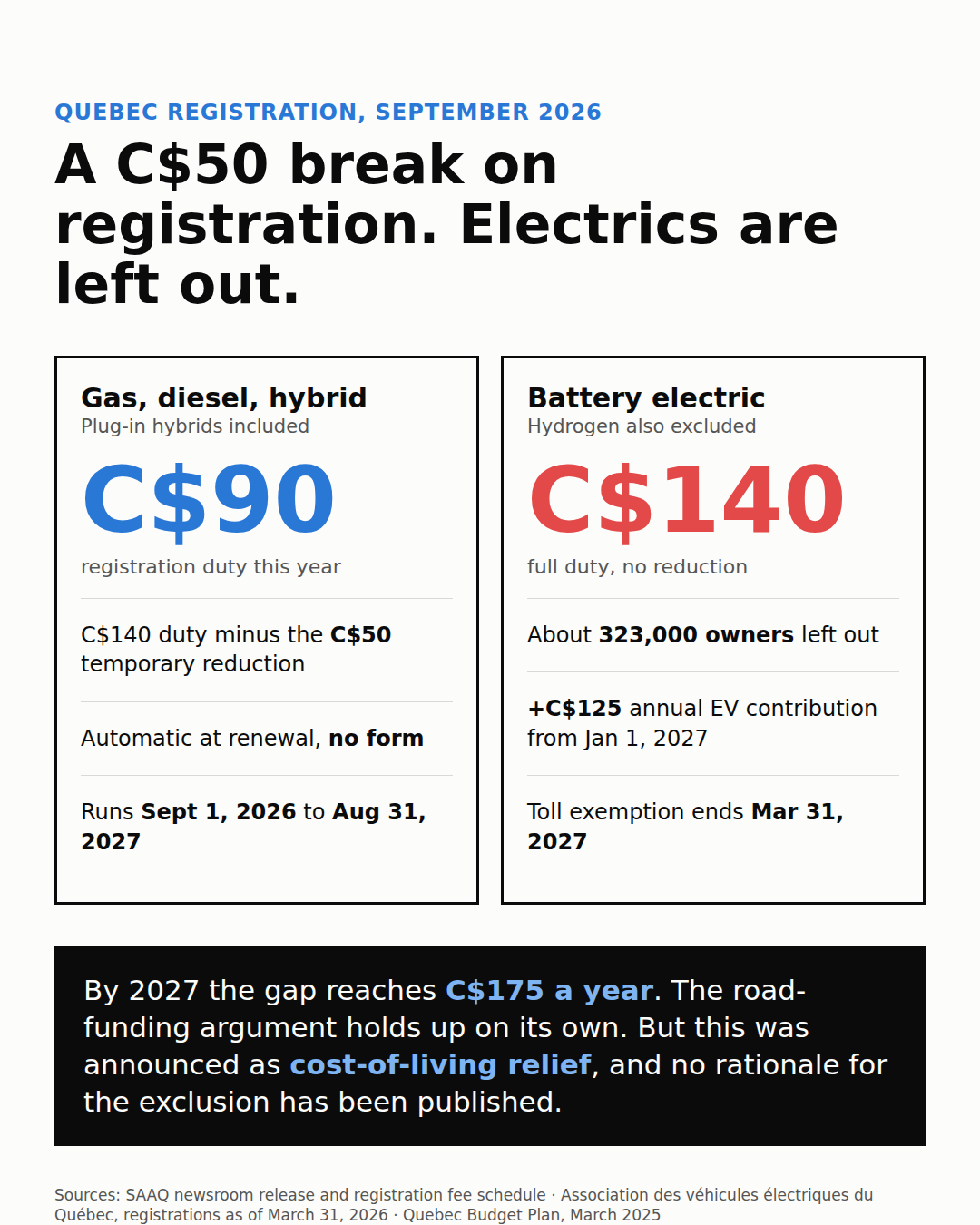
The rebate took effect Tuesday and runs to August 31, 2027. It applies automatically at renewal, no form to fill out. Gas, diesel, hybrid, plug-in hybrid all qualify.
Battery electrics do not. Neither do hydrogen vehicles, motorcycles, mopeds, motorhomes or commercial vehicles.
The rebate comes off the registration fee itself, which is C$140. So a gas car pays C$90 this year. An electric one pays C$140.
As of March 31, 2026 there were 454,922 electrified vehicles registered in Quebec, 71 percent of them battery electric. That is roughly 323,000 owners who will not see the C$50.
Here is the part I find odd. The plug-in hybrid gets the rebate. The same vehicle that will pay a C$62.50 annual EV contribution in 2027, half of what a battery electric pays. It wins on both sides.
What is coming: January 1, 2027, a C$125 annual contribution for battery electrics. March 31, 2027, the end of toll exemptions for zero-emission vehicles. August 31, 2027, the end of the C$50 rebate for everyone else. Between January and August 2027 the gap is C$175 a year. C$90 on one side, C$265 on the other.
I am not going to be dramatic about this. The user-pay argument holds up. Quebec’s fuel tax is 19.2 cents a litre, and a gas car driving 20,000 km at 8 L/100 km pays about C$307 a year in that tax alone. An electric one pays nothing.
But the C$50 was announced as cost-of-living relief, not as a road charge. And the cost of living went up for everybody, including the person who bought an electric car. I looked, and I could not find any government explanation anywhere for why electrics are excluded.
This is the kind of thing that is going to happen in every jurisdiction as EV numbers grow, so it is worth watching how it is framed. Road funding and cost-of-living relief are two different arguments, and mixing them is how you lose people.
Check it yourself. It is in the registration fee section on the SAAQ website, and the release is in their newsroom.
What do you think? Does it make sense to leave electrics out of a cost-of-living rebate, or are those two entirely separate questions?